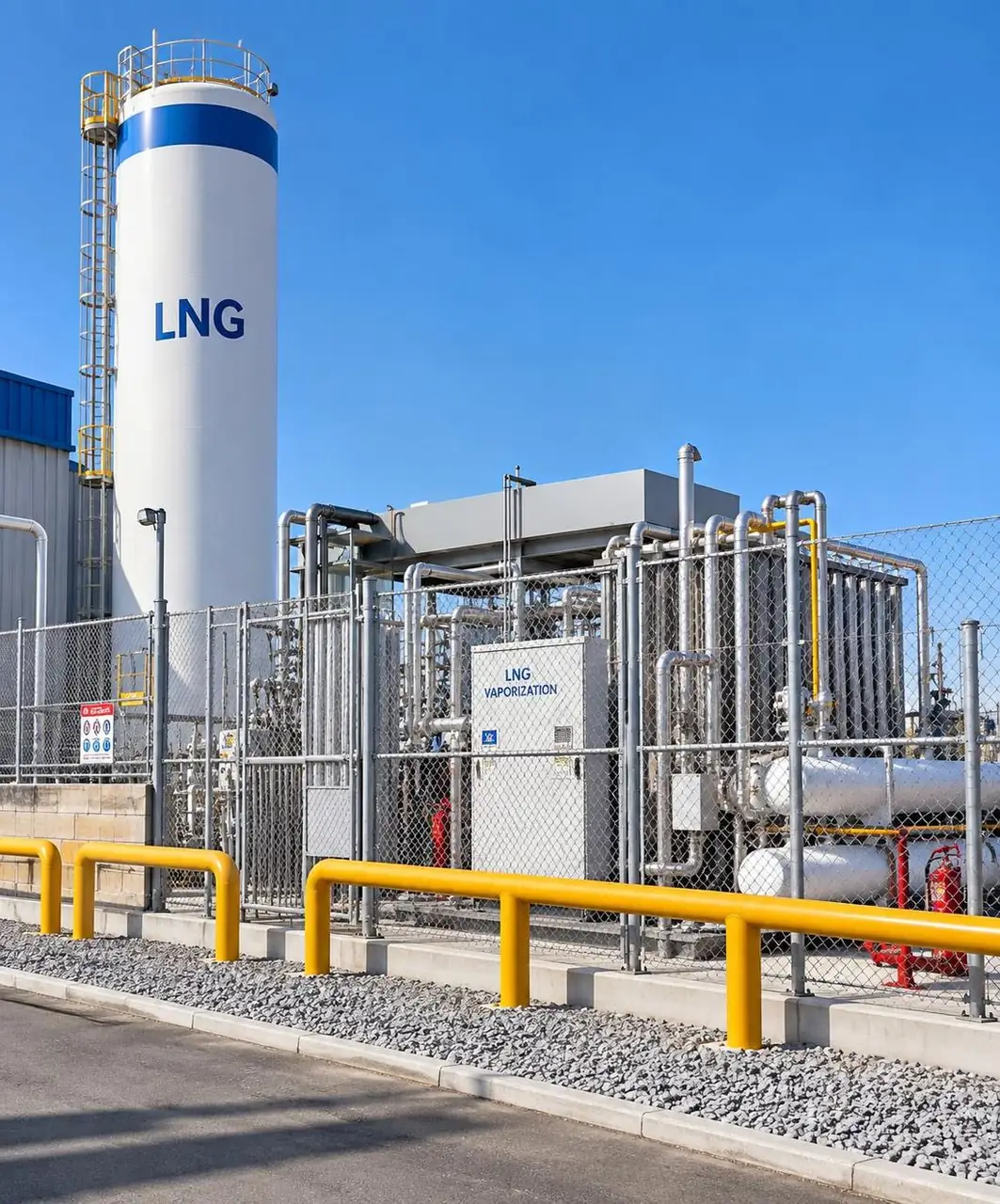

Backup LNG supply solutions
Mobile. Modular. Network-independent.Turn-key virtual LNG pipeline for heating and power generation at critical infrastructure and industrial sites.
Critical facilities cannot stop
When the power grid or the gas network is hit, essential services still need heat and electricity, immediately and reliably.

Hospitals
Heating, power and medical systems

Water treatment
Pumping and purification plants

Boiler houses
District and municipal heating

Municipal buildings
Public services and shelters

Industry and food
Process heat, bakeries and production
Each needs a fuel source independent of the network, delivered by road and started quickly.
Road logistics replace the pipeline
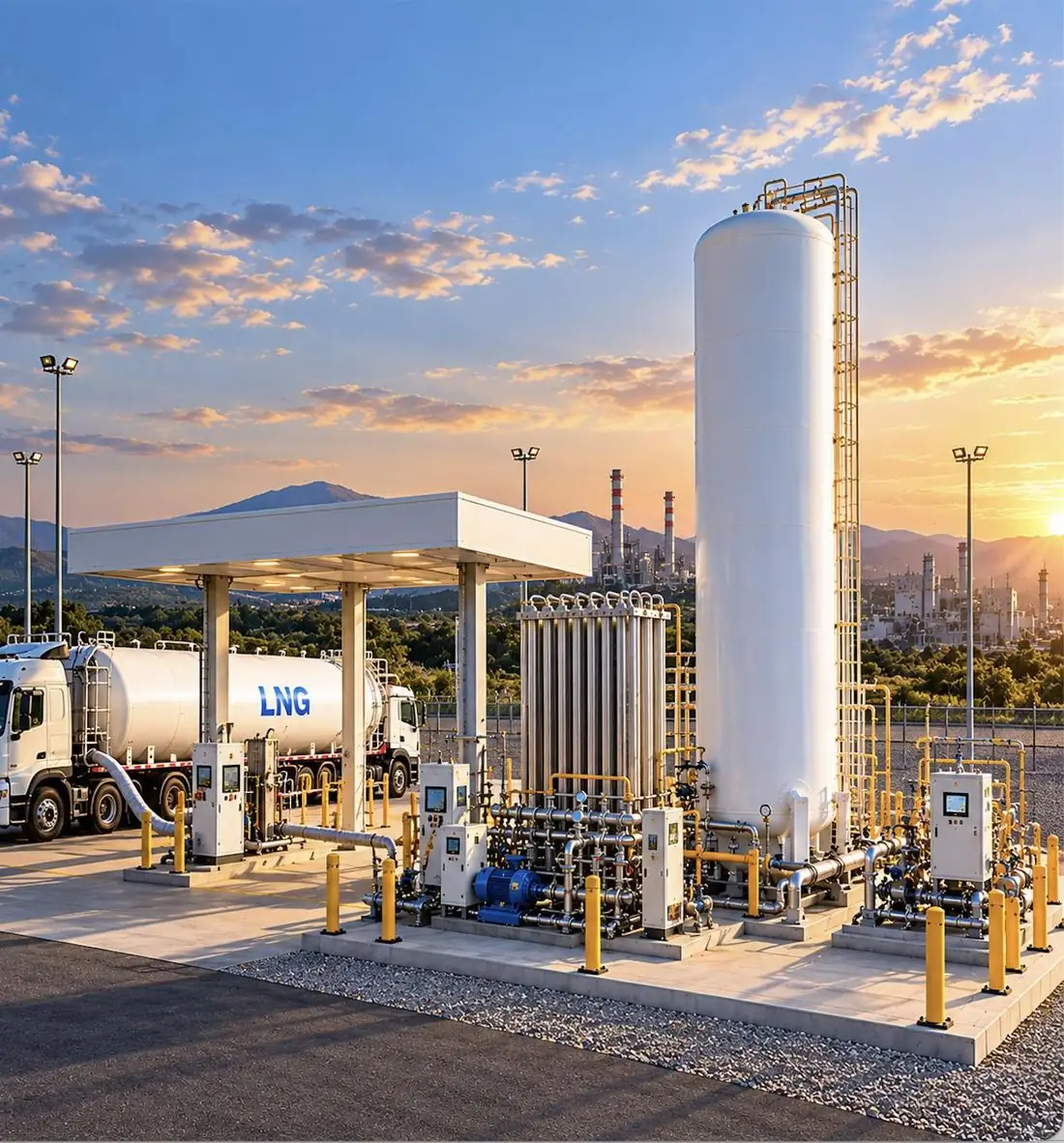
From terminal to consumer. No connection to the gas transmission system is required: fuel arrives by truck or ISO container.

Terminal
LNG terminals with truck loading bays

Transport
Cryogenic trailers and ISO containers by road

Storage
On-site unloading into cryogenic tanks

Regasification
Vaporizers, pressure control, metering and odorization

Consumers
Boilers, CHP, gas engines, turbines and local networks
The same chain serves a single boiler house or a multi-megawatt microgrid.
Four reasons to build resilience on a virtual pipeline

Network-independent
Fuel arrives by truck or ISO container. No connection to the gas transmission system is required.

Fast to deploy
Skid-mounted regasification and mobile turbines. A 1 MW turbine starts 1–3 hours after gas is available.

Scalable
From cryogenic cylinders for a farm to 1–35 MW of gas-fired generation for a city district.

Future-ready
Turbines and gas engines also run on CNG and renewable gas (biomethane), protecting the investment.
Result: resilient heat and power without waiting for permanent network repairs.
Matched to the size and criticality of each consumer

Small consumers
ServesHouseholds, farms, small businesses and warehouses
EquipmentCryogenic cylinders and portable LNG tanks, refilled by tanker.
Heat and power plants
ServesBoiler houses, CHP plants, bakeries and critical infrastructure
EquipmentMobile regasification skids fed from ISO containers or cryogenic trailers.
Stationary stations
ServesIndustrial sites and permanent supply hubs
EquipmentPermanent storage tank, unloading and process pumps, vaporizers, metering and automation.
ASKAY sizes each solution around consumption profile, criticality and site access.
Keeps production running when the main network fails
Built as stationary or rapidly deployable modules, sized to the consumer’s load.
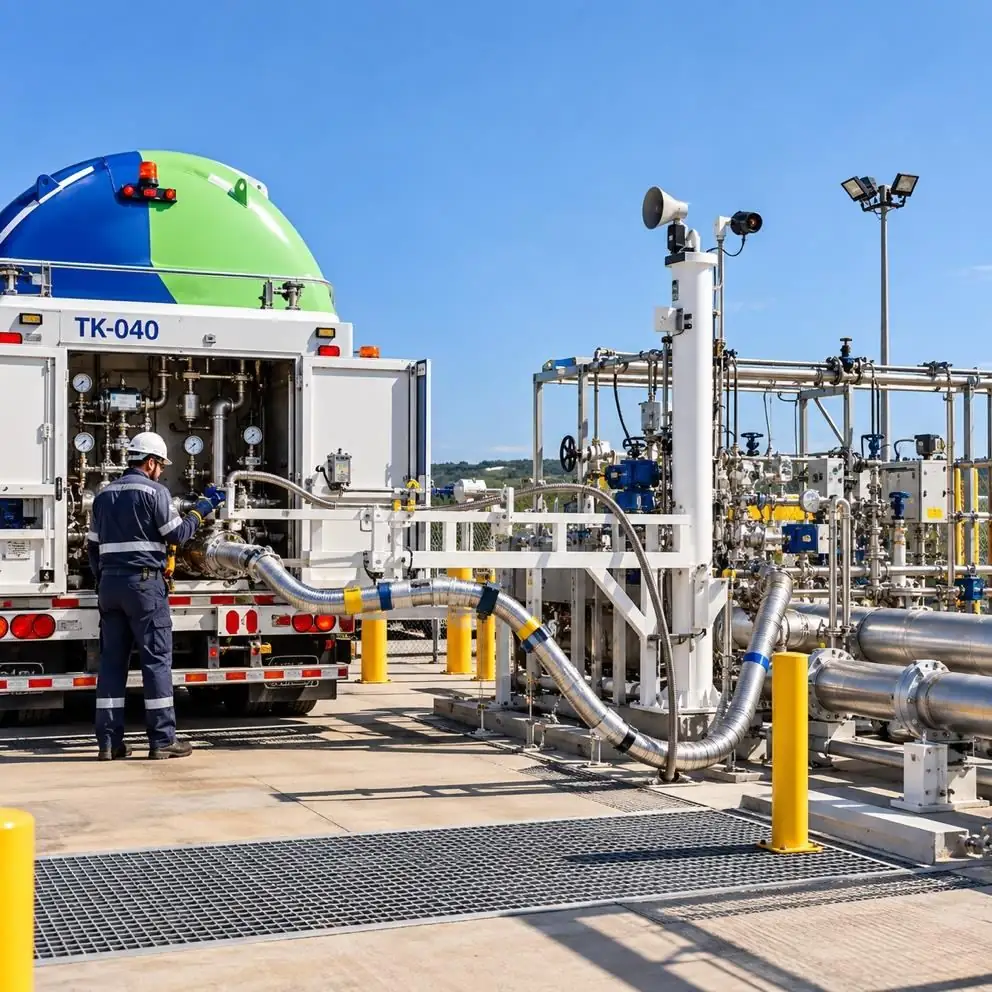

Unloading node
Cryogenic lines and pumps, pre-cooled against thermal shock

Regasification skid
Ambient vaporizers with integrated control

Pressure and metering
Delivery at consumer pressure, with accounting

Odorization unit
Odorant dosing for safe distribution

Automation (PLC/SCADA)
Remote monitoring, control and gas accounting

Vent stack or flare
Safe release of boil-off and relief gas
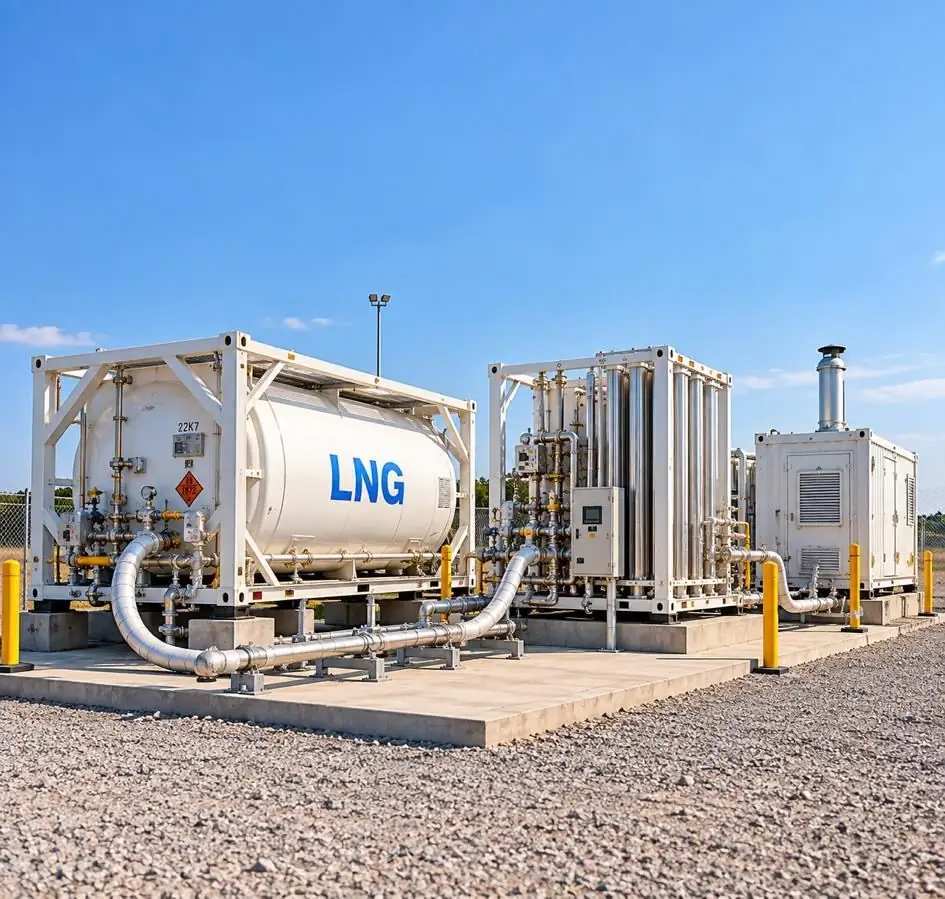
Permanent storage and regasification for continuous consumers
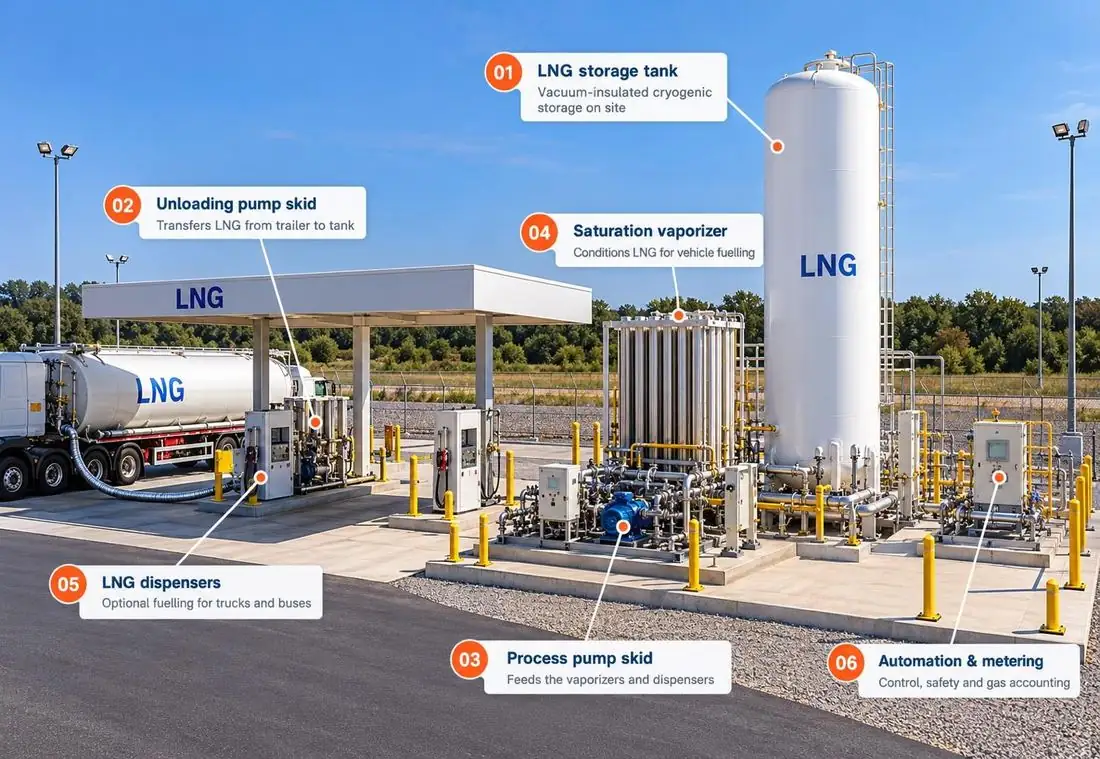
Station view: storage tank, pump skids, saturation vaporizer and dispensers.
- 01
LNG storage tank
Vacuum-insulated cryogenic storage on site
- 02
Unloading pump skid
Transfers LNG from trailer to tank
- 03
Process pump skid
Feeds the vaporizers and dispensers
- 04
Saturation vaporizer
Conditions LNG for vehicle fuelling
- 05
LNG dispensers
Optional fuelling for trucks and buses
- 06
Automation and metering
Control, safety and gas accounting
Trailer and container options for every stage of the chain
| Unit | Capacity | Role |
|---|---|---|
| Storage trailer | 20,000 gal (≈76 m³) | Rapid on-site storage |
| Transport trailer | 10,000 gal (≈38 m³) | LNG haulage |
| Regas trailer | 5,000 gal (≈19 m³) | Storage with integrated regasification |
| Bobtail truck | 2,000 gal (≈7.6 m³) | Onboard regasification |
| Onboard tank | 120 gal (≈0.45 m³) | Stainless-steel vehicle tank |
| Mobile regas unit | — | Trailer-mounted vaporizers |
US gallon capacities; m³ values are approximate conversions. Equipment supplied by Superior Performance Energy (USA).
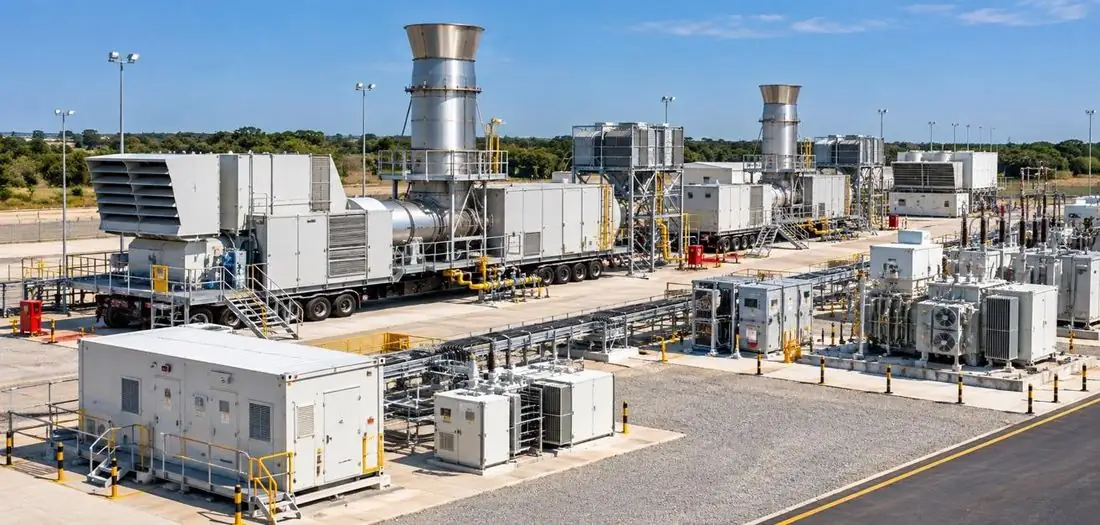
Mobile turbines and gas engines for critical loads
Deployable capacity
Gas engines and turbine gensets for critical sites
Mobile turbine unit
1,400 hp, trailer-mounted
Time to power
From arrival, once gas is available
Efficiency
Simple cycle; heat rate 13,000–16,000 BTU/kWh
Fuel flexibility
- CNG and LNG via regasification
- Renewable natural gas (biomethane)
- Liquid fuels as an option
Turbine data per equipment partner specification.
Distributed generation blocks with local control
Household, community and municipal levels, connected to the gas and electricity grids or running fully off-grid.
Generation
Gas engines and turbine generator sets, distributed across sites
Storage
Battery systems buffer peaks and outages for short-term ride-through

Control
Automatic dispatch, SCADA and data logging for remote network management

Fuel
LNG and CNG containers refilled by road through the virtual pipeline
One EPC contractor, proven equipment
Single counterparty: ASKAY leads the client interface and coordinates the equipment partner.
- Engineering — site survey, feasibility study (TEO), design and permits
- Procurement — equipment sourcing, LNG supply and logistics
- Construction — installation, testing and commissioning
- Operation — handover, staff training and service support
- Regasification skids and pressure-reduction units
- Cryogenic trailers and ISO containers
- Mobile gas turbines and gas-engine gensets
- Factory engineering support from Texas, USA
From data to operation
Data collection
Loads, consumption profile, site access
Data packageFeasibility (TEO)
Technical and economic justification
Feasibility reportDesign
Engineering documentation and approvals
Design packageSupply and install
Equipment delivery and mounting on site
Installed systemCommission
Start-up, testing and staff training
HandoverSupport
Maintenance, fuel logistics, service
Contract term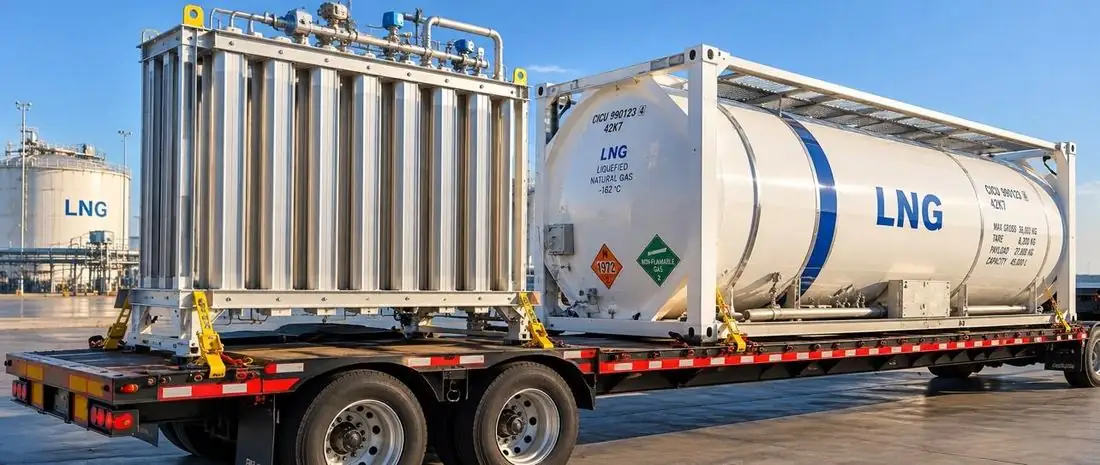
One responsible party from site survey to operation. ASKAY manages engineering, procurement, construction and handover end to end.
Schedules are confirmed after site, fuel logistics and permitting review.
A platform for local gas
Today’s backup becomes tomorrow’s local energy system.

2025–2035
Mobile turbines combined with mobile LNG/CNG supply as a long-term generation model.
Microgrids
Local, distributed generation becomes the standard for resilient cities.
Local gas
Biomethane from agriculture, landfill and wastewater gas, and associated gas, compressed or liquefied close to where it is used.
The same turbines and regasification equipment run on renewable gas, protecting the investment.
Proposed next step
Select the first site for technical assessment and define the backup supply solution.
- 1Share site data: heat and power demand, site access
- 2Site survey and fuel logistics review
- 3Feasibility study (TEO) and solution concept
- 4Project-specific technical and commercial proposal
Equipment partner: Superior Performance Energy (USA)